Levelling Up Locally: We Need Authentic Community Power to Reduce Inequalities
We all know the benefits of involving communities in the Levelling Up agenda, but the reality of this ambition hasn’t been seen, which has focused almost exclusively on devolution. This is not a proxy for authentic, grassroots community engagement and involvement. Although locally informed policy and spending decisions are more likely to benefit those in the immediate community, devolution doesn’t make much difference to the attitudes of communities who feel left behind by local government and distrust their local politicians. Authentic ‘levelling up’ which reduces regional and societal inequalities, includes opportunities for participation in civil society involving those who are directly impacted on policy decisions in the policy process.
Community Power in Cumberland
Cumbria is currently going through a Local Government Reorganisation (LGR), where the borough and county councils will be combined to one council, called a unitary authority. This is a big change, and it provides an exciting opportunity for this new council to do things differently, and one of these things is including communities more in decisions that impact on them.
In a previous research project, Connected Communities Cumbria, I worked with children and young people in different communities in West Cumbria to conduct their own community research. Together, we conducted over 600 doorstep interviews to learn about people’s views of their community, their health and wellbeing and their social networks. We found that only 9 people reported they would go to the Council or a councillor if they wanted to make a positive change in their community!
In response to these findings and the creation of the new council, I am working on a project that aims to bring communities together with different people involved in decision-making and delivering services at the new council, to co-create an approach to making sure that communities have a say in decisions that impact on their lives.
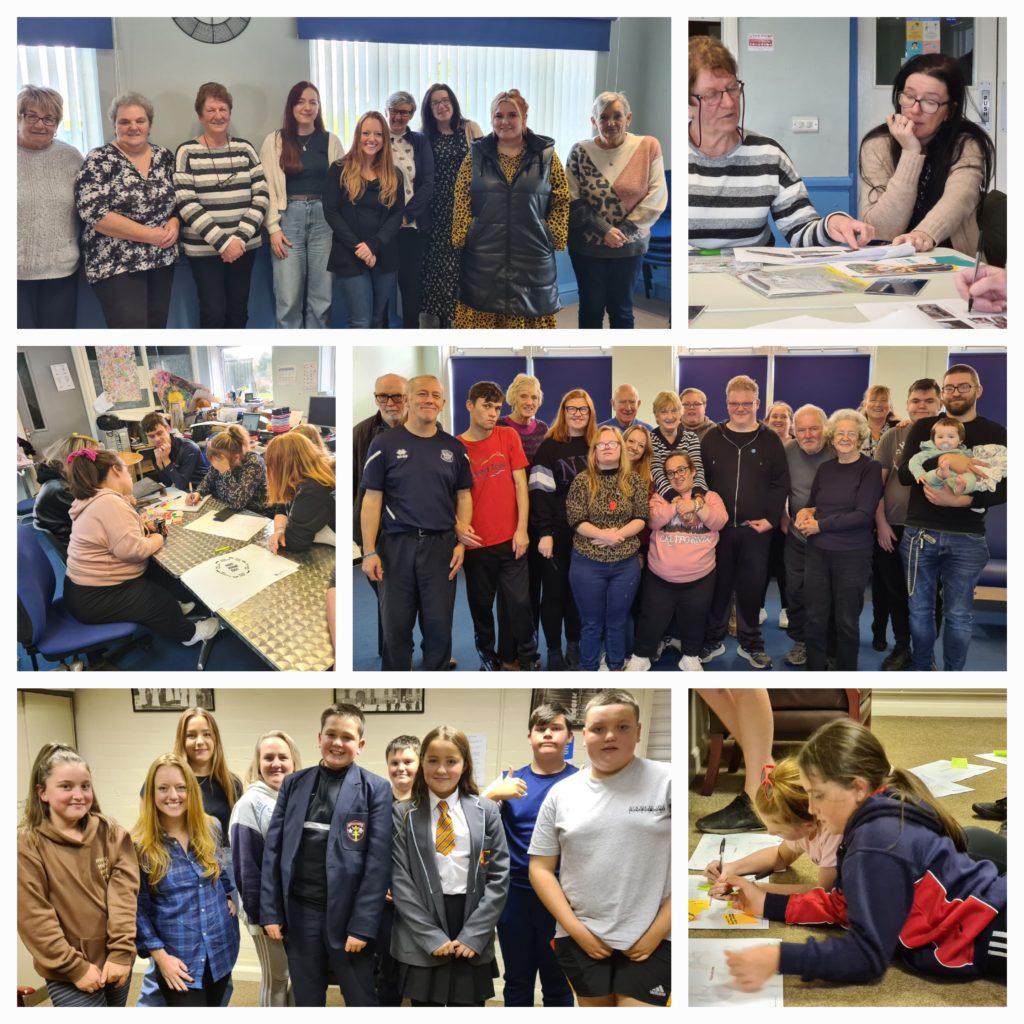
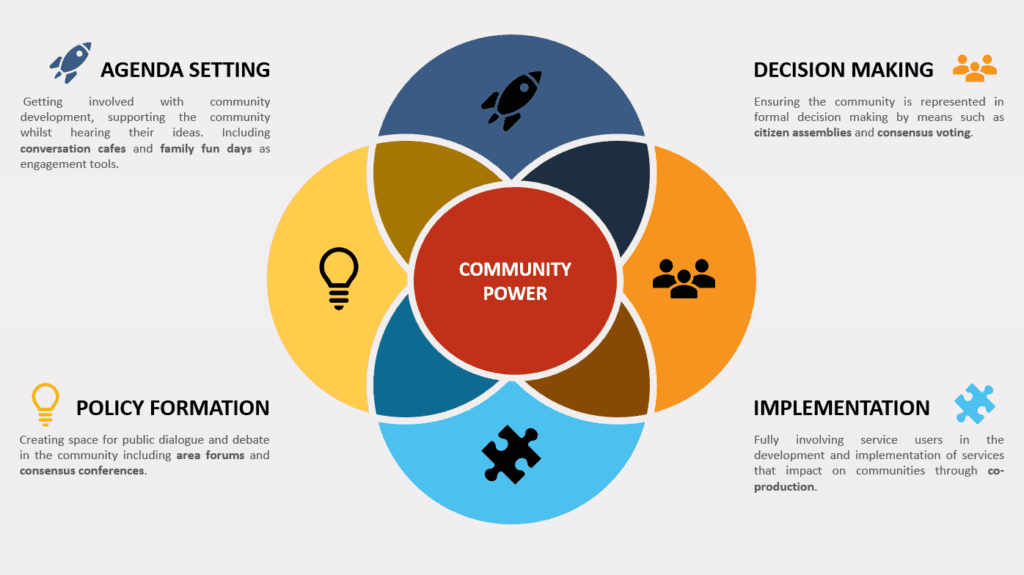
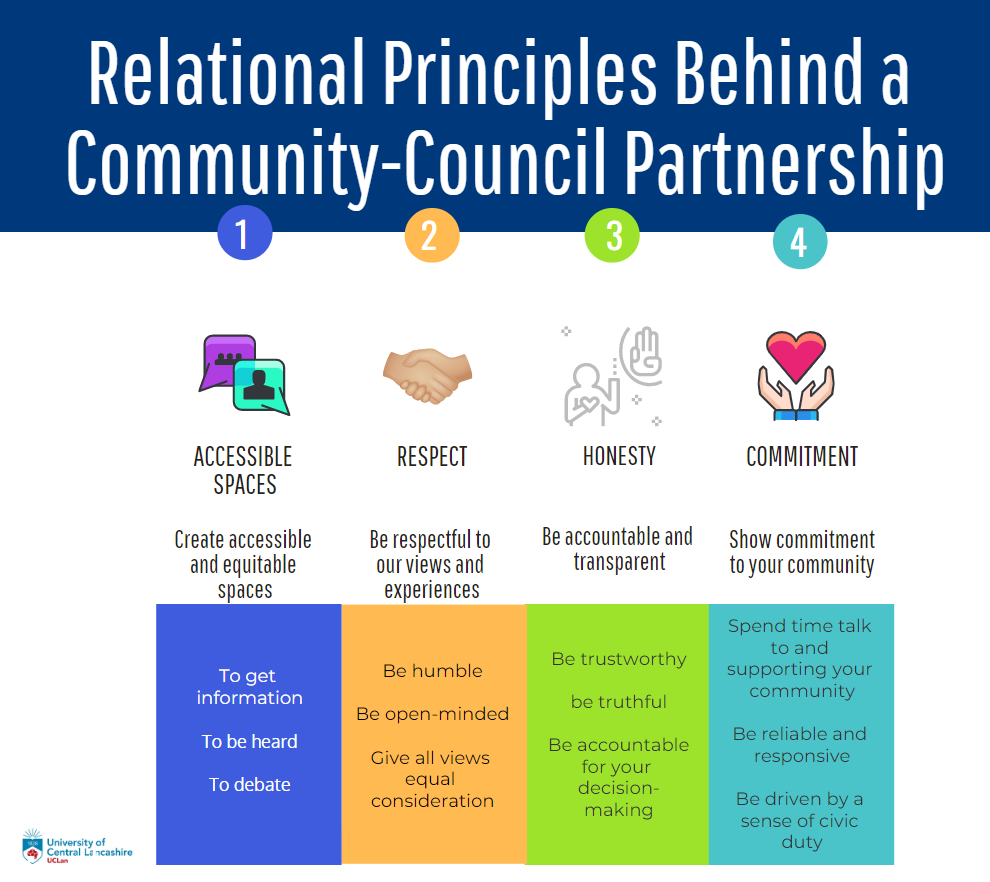
For the past year, I have been working closely with 40 residents in four communities that would be considered ‘left-behind’, in that they experience economic hardship and feel their areas have been ‘left out’ in terms of regeneration investment. We have been exploring what relationships we want with the new council and how we would like to be involved in the policy process, including agenda-setting, policy formation, decision making and implementation. The main things we have developed are summarised in the images here:
This process is already making a difference in communities. Residents tell us they enjoyed being part of a deliberative process where ”everyone listened to one another, we felt heard and were able to say something without being knocked down”. It has made people involved feel more confident in speaking up in community matters that are important to them, with one gentleman saying, “You have given me fire power!” The communities involved are now aware of ways they can potentially enact their community power and are informed and excited to work with the council to develop new ideas.
I have been working closely with Cumberland Council executive board and senior officers to start to critically think about how to develop a whole system culture change to embed authentic community power. The next step is bringing key members and officers with communities together, starting a process of community conversations, building relationships, enable spaces of dialogue and debate. The foundations are being laid for real change in Cumberland, hopefully leading the way for a new wave of national community participation and empowerment, providing a means to ensure that the voices of those most often ignored are given the platform to shout the loudest.
Suzanne Wilson is a Research Fellow in the Centre for Citizenship and Community at UCLAN.


